
| Growth | Marketing | Tech ...
August 3, 2026
The Death of Organic Reach — And the UGC Strategy That Replaces It
The Death of Organic Reach — And the UGC Strategy That Replaces It
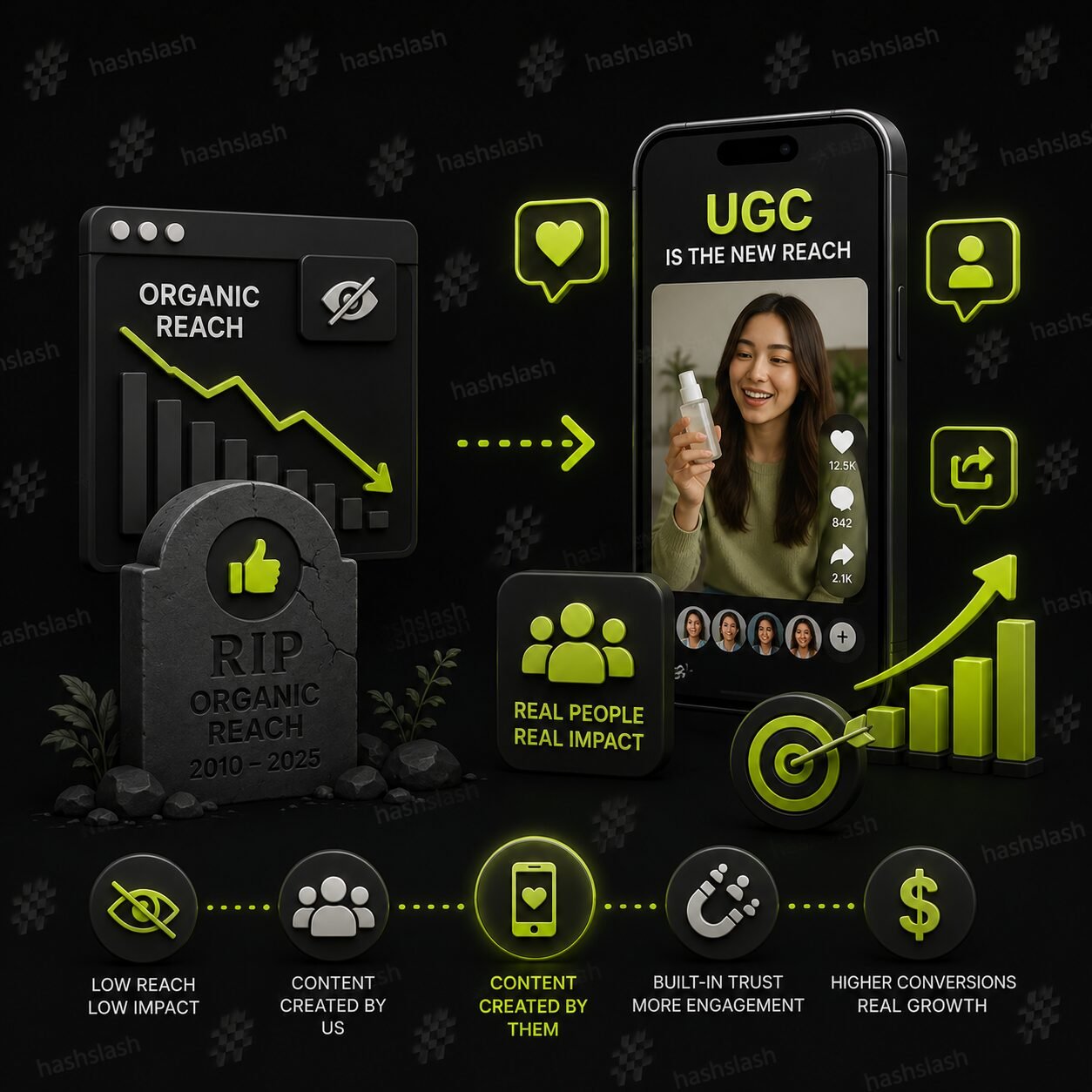
Organic reach isn't dead—but it's no longer enough.
As social media algorithms become more competitive, even great brands struggle to reach their audiences without paid promotion.
Meanwhile, one type of content continues to outperform polished brand campaigns: User-Generated Content (UGC).
In 2026, the brands winning attention aren't creating more ads—they're creating more authentic conversations.
#/.Hash-Slash→








Why Organic Reach Is Declining ?
1. Algorithms Prioritize Engagement
Social platforms increasingly reward content that keeps users engaged, encouraging discussions, shares, saves, and longer watch times rather than simply publishing branded posts.
2. Competition Is Higher Than Ever
Millions of creators and businesses publish content daily, making it harder for brands to earn consistent visibility through organic posting alone.
Why UGC Outperforms Traditional Ads ?
1. People Trust People
Customers are more likely to trust reviews, customer experiences, and creator recommendations than highly polished advertisements.
2. Authenticity Drives Engagement
UGC feels genuine, relatable, and less promotional, leading to higher engagement and stronger purchase intent.
3. Content at Scale
Every satisfied customer has the potential to become a content creator, helping brands produce fresh, diverse content continuously.
Building a Winning UGC Strategy
1. Encourage Customer Stories
Invite customers to share product experiences, testimonials, before-and-after transformations, and unboxing videos across social platforms.
2. Partner with Micro-Creators
Invite customers to share product experiences, testimonials, before-and-after transformations, and unboxing videos across social platforms.aSmaller creators often deliver stronger engagement and higher trust than celebrity influencers because their audiences view them as more authentic.
3. Repurpose Across Channels
Reuse high-performing UGC across websites, landing pages, paid ads, email campaigns, product pages, and social media to maximize ROI.
UGC + AI = Smarter Marketing
1. Identify Top-Performing Content
AI analytics can identify which customer-generated content drives the highest engagement, conversions, and revenue.
2. Personalize Customer Experiences
AI analytics can identify which customer-generated content drives the highest engagement, conversions, and revenue.
3. Personalize Customer Experiences
AI helps deliver the most relevant UGC to different audience segments based on interests, behavior, and buying intent.
Common UGC Mistakes
1. Treating UGC Like Advertising
Authenticity disappears when customer content becomes overly scripted or heavily edited.
2. Ignoring Community Building
UGC succeeds when brands actively engage with customers, respond to conversations, and celebrate their communities.
3. Not Measuring Business Impact
Track conversions, customer acquisition, engagement quality, and repeat purchases—not just likes and views.
How Hash-Slash Builds Modern Content Strategies ?
Content That Creates Customers
At HashSlash, we combine AI, SEO, GEO, social media strategy, and UGC to build content ecosystems that generate measurable business growth.
Our services include:
• UGC strategy and campaigns
• Creator collaboration frameworks
• AI-powered content optimization
• Social search optimization
• Performance analytics
• Full-funnel content marketing
We help brands earn attention, build trust, and convert audiences into loyal customers.
CONCLUSION
Organic reach alone can no longer fuel sustainable growth.
Brands that combine authentic UGC with AI-driven insights and strategic distribution will outperform those relying only on traditional advertising.
At HashSlash, we help businesses build content strategies that earn trust, drive engagement, and deliver measurable revenue.
Contact us to build your next-generation marketing engine. →
STOP TESTING.
START SCALLING
Growth systems, launches, SEO, performance, and digital execution from the HashSlash team.